How test day usually goes
Two coaches, one clipboard, 18 players. Sprint, standing long jump, counter movement jump, Yo-Yo. In the evening someone types the sheets into a spreadsheet. Four weeks later a player asks whether he has improved. The answer sits in a file on someone else's computer.
I saw this often enough as a team manager. The tests themselves are good, the VBG catalog describes them well. What is missing is the path from the sheet to the development of the individual player. That is exactly what HOLULA APEX is built for.
The 37 VBG tests are already in
The VBG catalog "Diagnostics and support in ice hockey" is built into the app: 37 tests in ten categories, from body composition to strength, speed and agility, stability, mobility and monitoring. Each test comes with its description, the equipment needed and the metrics it delivers.
You pick tests for the day, not single columns. One chip "RSS" stands for all seven sprint columns. If you want to leave out a column, tap the small arrow. The row "Recently captured" brings back last time's selection with one tap, and a saved test day ("Pre-season", "Ice check October") is shared by all coaches in the club.
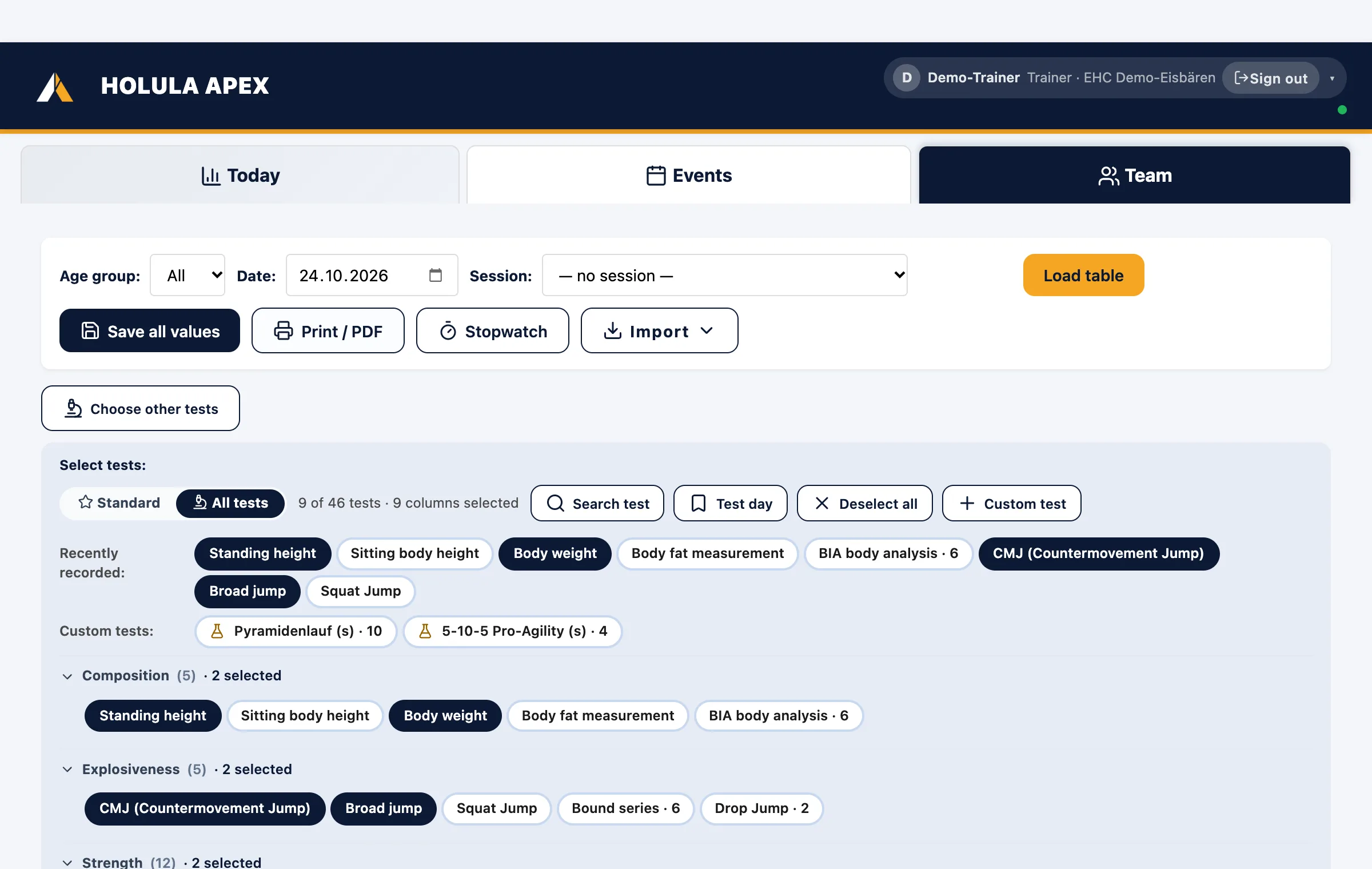
Capture where you measure
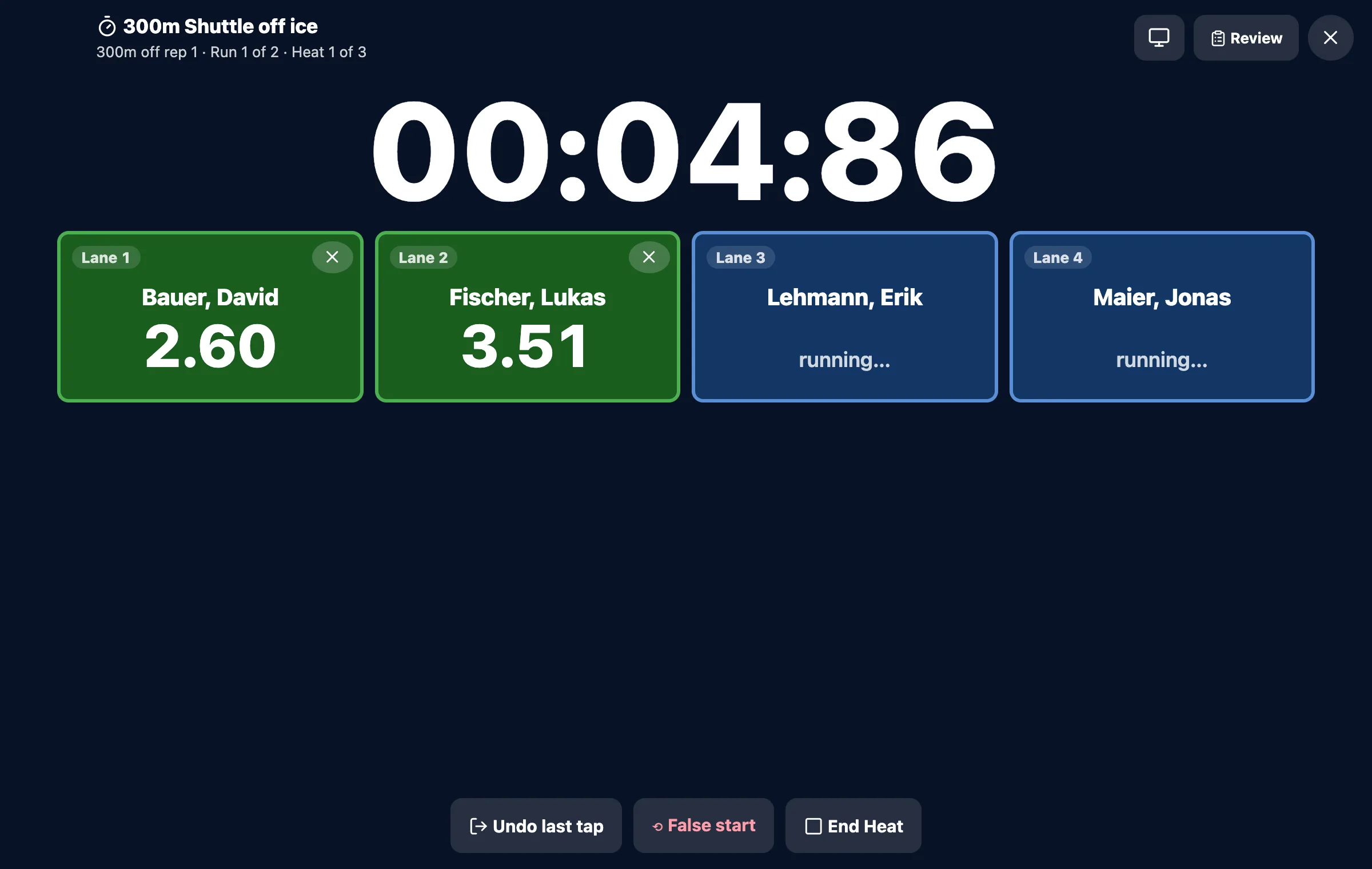
Quick entry is a table: players in rows, tests in columns, values typed straight into the iPad. For times, the rink-side stopwatch runs along: up to eight athletes per heat, each on their lane, one tap per finish. Split times, false start, a spectator display for the rink. In the second heat the clock already knows the values from the first and never replaces anything without asking.
Tests that are not in the catalog you create yourself. 5-10-5, pyramid run, burpees in 60 seconds, medicine ball throw. Three steps: what is measured, how (attempts, split times, left and right side), done. 16 templates help you get started. A custom test then behaves like any catalog test, including stopwatch, comparison and player app. For tests with a duration the clock counts down and beeps at ten seconds.
If you already have data, import it: DEB test protocols as Excel, DEB on-ice templates, PDF protocols. Existing players are updated, not duplicated.
Evaluate without a calculator
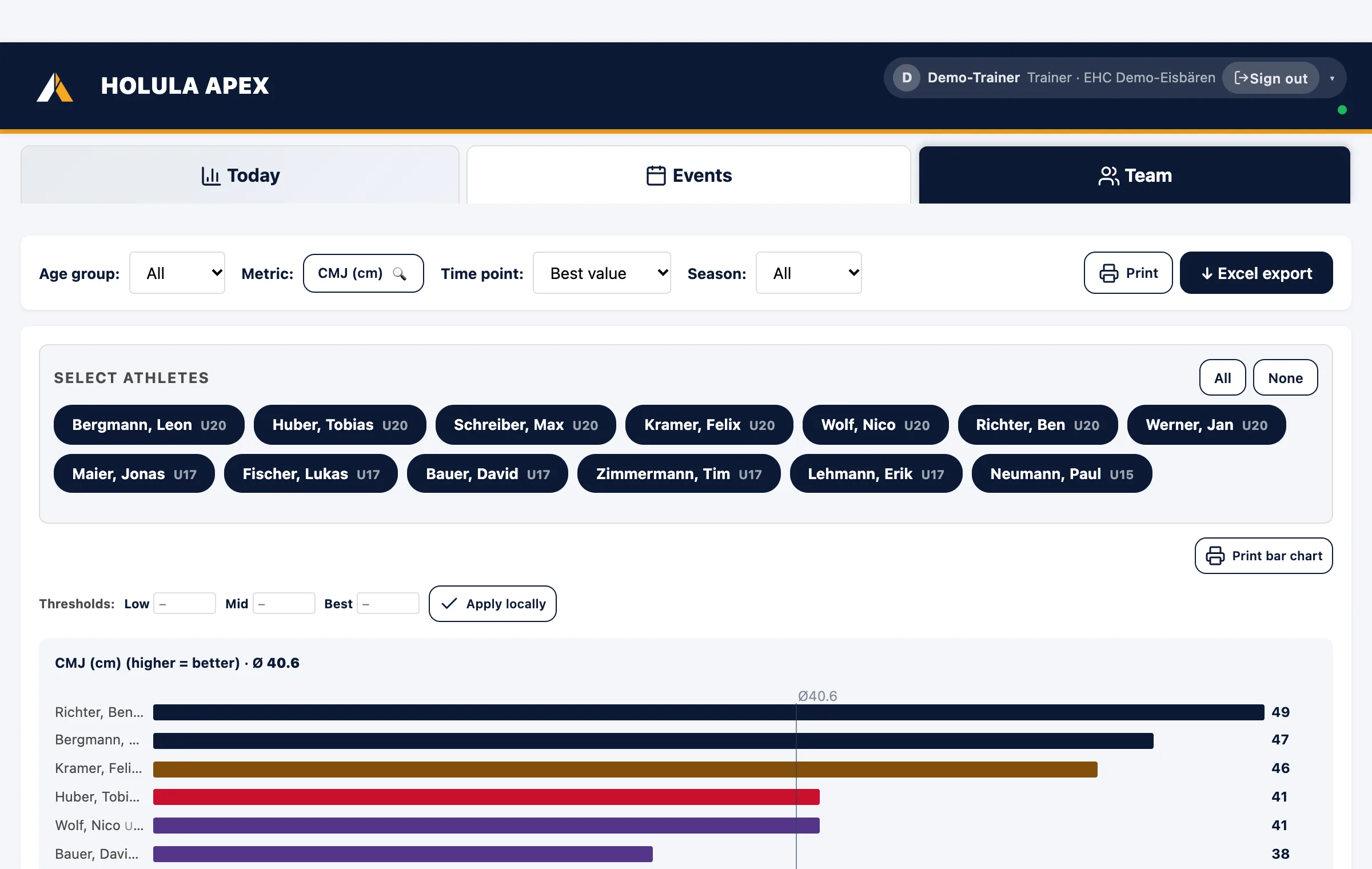
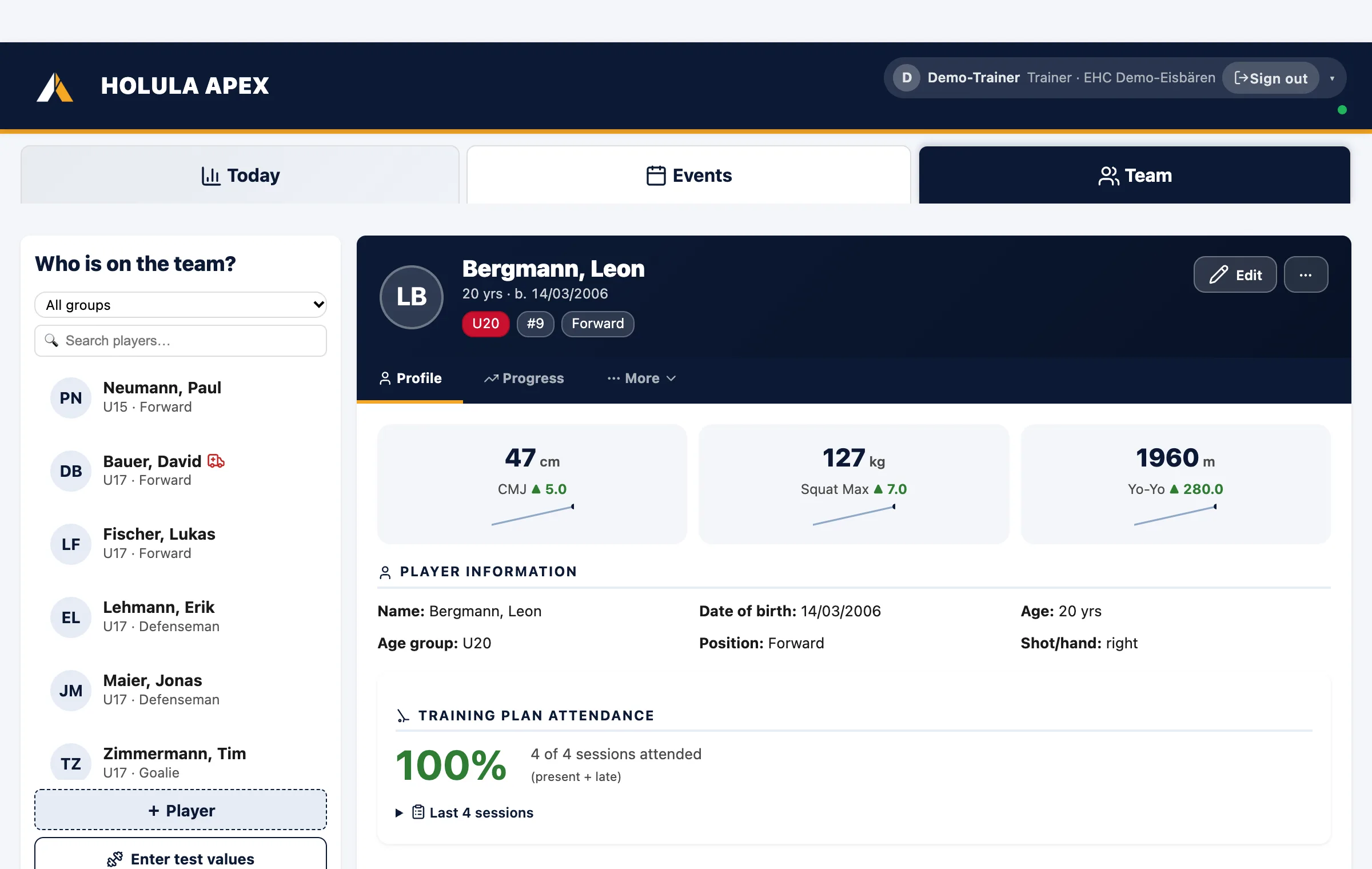
Every saved value lands in the player's profile. The history shows how CMJ, Yo-Yo or sprint move over the season. The comparison puts the team side by side as bars or on top of each other as a radar across more than 40 metrics. Traffic-light colours come from reference values you adjust per club and age group.
Endurance and cognition have their own modules: Yo-Yo IRT and 300 m shuttle with live group capture, plus reaction, concentration and search tests that players can also do on their own phone. These are training and demonstration tools, not medical devices. The app does not make diagnoses.
What the player sees
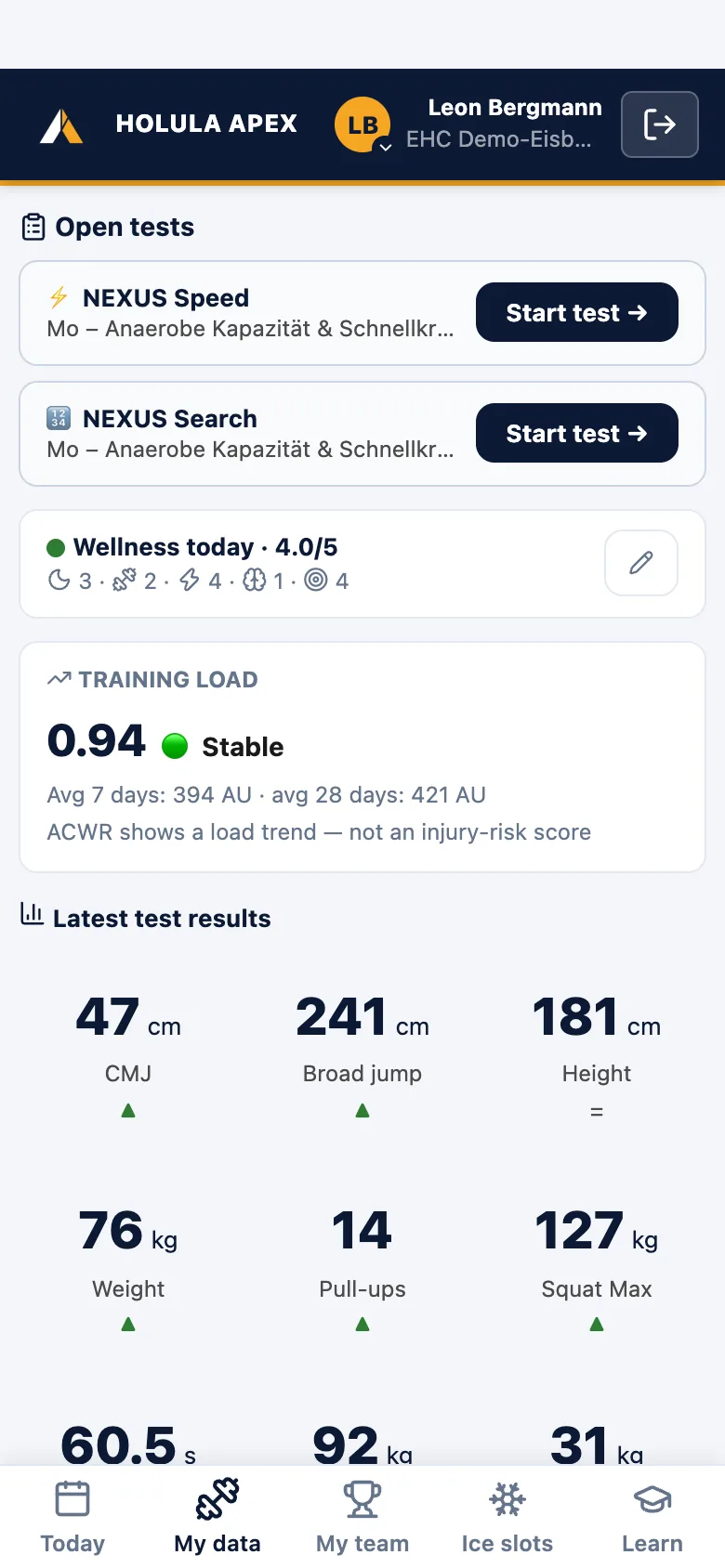
Every player has their own app. It shows their values, their history and their metric cards, not anyone else's. A portfolio PDF is one tap away, for example for a scouting camp. Parents see schedules and RSVPs, no test values.
"Away from handwritten lists and Excel, towards data management that accompanies every player in their development." — Ralf Wolf, head coach U17, MERC Mannheim
Price
The Diagnostics module costs €4.90 per team per month on top of the €3.90 basics. It is included in the complete package at €9.90 per team. The first 30 days are free with all modules, no credit card. All prices are final prices without VAT (German small-business rule, § 19 UStG). Price calculator.
Videos on test day: Deep dive 2 on YouTube, including "Test day at the boards" and "Custom tests".